Understanding the Shape of Functions
A sphere rolling in a concave bowl settles at the minimum point
A sphere rolling off a convex surface demonstrates instability at the maximum
The tangent always lies below the curve. The slope of the tangents increase from negative, through zero, to positive.
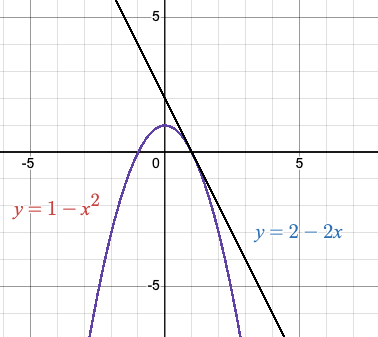
The tangent always lies above the curve. The slope of the tangents decrease from positive, through zero, to negative.
When the graph curves upward like a smile
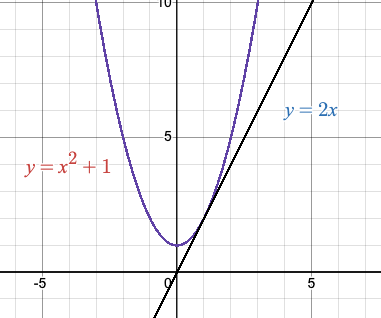
A function y = f(x) is concave up (or concave upward) on an interval if the graph of the function lies above all of its tangent lines on that interval. Visually, the graph curves upward, resembling the shape of a bowl or the letter "U".
For a concave up region of a curve the gradient of the curve/tangent changes from negative to positive. For this region the graph of the gradient (derivative) is increasing (from negative to positive). Hence the gradient curve has itself a positive gradient, that is, the second derivative is positive.
The primary mathematical test for concavity uses the second derivative:
The second derivative f''(x) measures the rate of change of the first derivative f'(x). When f''(x) is positive, the slope is increasing, creating the upward curve.
First derivative: f'(x) = 2x
Second derivative: f''(x) = 2
Since f''(x) = 2 > 0 for all x, the parabola y = x² is concave up everywhere. The vertex at (0,0) represents a minimum point.
Think of the concave up bowl in the animation. When the sphere is placed anywhere in the bowl, gravity pulls it toward the lowest point. This represents a stable equilibrium—any small displacement results in a force that returns the object to the minimum.
In calculus terms, at a critical point where f'(x) = 0, if f''(x) > 0, then that point is a local minimum. The concave up shape ensures that nearby points have higher function values.
A function changes from concave up to concave down (convex) (or vice versa) at an inflection point. At these points:
First derivative: f'(x) = 3x²
Second derivative: f''(x) = 6x
• When x < 0: f''(x) < 0 (concave down (convex))
• When x > 0: f''(x) > 0 (concave up)
The point (0,0) is an inflection point where concavity changes.
Optimization: In economics, a concave up cost function indicates increasing marginal costs—each additional unit becomes more expensive to produce.
Motion: If position s(t) has s''(t) > 0, the object is speeding up in the positive direction (or slowing down less quickly in the negative direction).
Data Analysis: Concave up curves in data suggest accelerating growth, such as exponential population growth or compound interest effects.
When the graph curves downward like a frown
A function y = f(x) is concave down (convex) on an interval if the graph of the function lies below all of its tangent lines on that interval. Visually, the graph curves downward, resembling an upside-down bowl or the letter "∩".
Note on terminology: In some contexts, especially in economics and optimization theory, "concave" without a modifier refers to what we call "concave down (convex)." A function that is concave down (convex) is also called "convex" in the sense of having a convex upper boundary. However, in calculus, we typically use "concave up" and "concave down (convex)" to avoid confusion.
For a concave down (convex) region of a curve the gradient of the curve/tangent changes from positive to negative. For this region the graph of the gradient (derivative) is decreasing (from positive to negative). Hence the gradient curve has itself a negative gradient, that is, the second derivative is negative.
The mathematical test for concave down (convex) behavior uses the second derivative:
When f''(x) is negative, the first derivative f'(x) is decreasing. This means the slope of the function is getting smaller (less steep), creating the downward curve.
First derivative: f'(x) = -2x
Second derivative: f''(x) = -2
Since f''(x) = -2 < 0 for all x, the inverted parabola y = -x² is concave down (convex) everywhere. The vertex at (0,0) represents a maximum point.
Consider the convex bowl in the animation (opening downward). When the sphere is placed on top, any slight disturbance causes it to roll away. This represents an unstable equilibrium—the sphere cannot remain at the peak and will naturally move toward lower positions.
In calculus, at a critical point where f'(x) = 0, if f''(x) < 0, then that point is a local maximum. The concave down (convex) shape ensures that nearby points have lower function values, making the critical point a peak rather than a valley.
The key differences between concave up and concave down (convex) functions:
• Graph curves upward (∪ shape)
• Slope is increasing
• Critical points are local minima
• Stable equilibrium in physical systems
• Graph lies above tangent lines
• Graph curves downward (∩ shape)
• Slope is decreasing
• Critical points are local maxima
• Unstable equilibrium in physical systems
• Graph lies below tangent lines
Projectile Motion: The height of a thrown ball follows a concave down (convex) parabola. After reaching maximum height, the ball descends. The concave down (convex) shape reflects constant downward acceleration due to gravity.
This represents height (in meters) as a function of time (in seconds).
h'(t) = -9.8t + 20 (velocity)
h''(t) = -9.8 < 0 (acceleration due to gravity)
The negative second derivative confirms the concave down (convex) parabola, with maximum height occurring when h'(t) = 0.
Diminishing Returns: In economics, a concave down (convex) production function indicates diminishing marginal returns—each additional input produces less additional output than the previous input.
Learning Curves: Skill acquisition often follows a concave down (convex) curve initially—rapid improvement at first, then slower progress as one approaches mastery.
Concavity is essential for classifying critical points:
This test provides a quick way to classify extrema without analyzing the first derivative on both sides of the critical point.
A comprehensive overview of second derivatives, concavity, and inflection points
The second derivative f''(x) tells us about the curvature or concavity of a function. It measures how the rate of change (first derivative) is itself changing.
An inflection point occurs where the curve changes from concave up to concave down (or vice versa).
| Condition | f'(a) | f''(a) | Classification |
| Standard minimum | = 0 | > 0 | Local minimum |
| Standard maximum | = 0 | < 0 | Local maximum |
| Flat minimum (x⁴) | = 0 | = 0 | Local minimum (check f⁽⁴⁾ > 0) |
| Flat maximum (-x⁴) | = 0 | = 0 | Local maximum (check f⁽⁴⁾ < 0) |
| Horizontal inflection (x³) | = 0 | = 0 | Inflection point (f'' changes sign) |
| Sloped inflection | ≠ 0 | = 0 | Inflection point (f'' changes sign) |
| Concave up region | any | > 0 | Curve bends upward |
| Concave down region | any | < 0 | Curve bends downward |